
Women's Wellbeing is not a Luxury.
Wellbeing Is Not a Luxury. For Women in Leadership, It's the Foundation.
The Scottish Women's Wellbeing Summit on why the burnout crisis is the leadership crisis no one is talking about enough.
Introduction:
There is a conversation happening in boardrooms, in therapy waiting rooms, in WhatsApp groups between women who hold impressive titles and feel exhausted behind them. It is a conversation about burnout, not the trendy, Instagram-friendly, let's all heal version, but deep, structural burnout that chips away at ambition, identity, and the desire to keep going.
And the numbers are stark.
Six in ten senior-level women report frequently feeling burned out, the highest level ever recorded , compared to only half of men at the same level. From 2022 to 2025, an average of 29% of women in leadership roles reported experiencing burnout, compared to 19% of men , a ten-point gap that has remained stubbornly consistent over four years.
This is not a personal failing. It is a pattern. And it has consequences that reach far beyond the individual.
When Women Burn Out, Ambition Burns With Them
For the first time in the decade that McKinsey and LeanIn.Org have tracked women in the workplace, there is a measurable ambition gap. Women are less interested in being promoted than men, but critically, when women receive the same career support that men do, this gap falls away entirely.
Read that again. The ambition is there. What is missing is the conditions that allow it to survive.
Women are making decisions around trade-offs and deciding senior leadership is not worth it, not because they lack drive, but because they can see what it costs the women already at the top. Among senior-level women who are reluctant to pursue promotion, 21% say it is because they believe top roles lead to burnout and unhappiness.
This is the cruel irony of the burnout epidemic: it does not just drain the women experiencing it, it actively discourages the women watching.
The Hidden Weight Women Carry
Burnout among women in leadership does not happen in a vacuum. About one in six women report having to address personal or family responsibilities during work daily or several times a day, compared to one in nine men. These daily disruptions are directly associated with higher levels of stress, worry, and burnout.
Women are also absorbing invisible labour that rarely shows up in performance reviews. 40% of women leaders say their DEI work, the mentoring, the advocating, the emotional heavy-lifting, isn't acknowledged in performance reviews at all. The labour is real. The recognition is not.
Female managers have recorded some of the largest drops in positive wellbeing indicators of any group, pointing to intersectional dynamics across age and leadership roles. The more responsibility, it seems, the greater the cost.
Burnout Is Not Just a Wellbeing Problem — It Is a Business Problem
If the human case is not enough, consider the organisational one.
Burnout costs organisations an average of £10,000 per year for a manager and over £20,000 per year for an executive in lost productivity alone — and globally, burnout-related losses are estimated at $322 billion annually.
Research shows a clear inverse relationship between CEO burnout and business performance: higher burnout levels correlate directly with poorer outcomes. Meanwhile, companies in the top quartile for gender diversity on executive teams are 25% more likely to have above-average profitability, and inclusive teams are up to 35% more productive.
The business case for supporting women's wellbeing is not soft. It is one of the most measurable levers available to organisations today.
Wellbeing Is Not the Opposite of Ambition, It Is What Makes It Sustainable
Here is what gets lost in the productivity conversation: despite higher burnout, women are more likely than men to describe themselves as extremely motivated to pursue career growth, 20% versus 16% of men. The drive is not gone. It is being asked to exist without adequate support.
Women leaders across industries are integrating empathy with decisiveness, authenticity with authority, and ambition with wellbeing, proving that strong leadership does not require abandoning humanity.
But that integration requires something. It requires communities that take the whole person seriously. It requires permission to pause. It requires spaces where the conversation goes deeper than productivity hacks and gets honest about the structural weight that so many women are carrying.
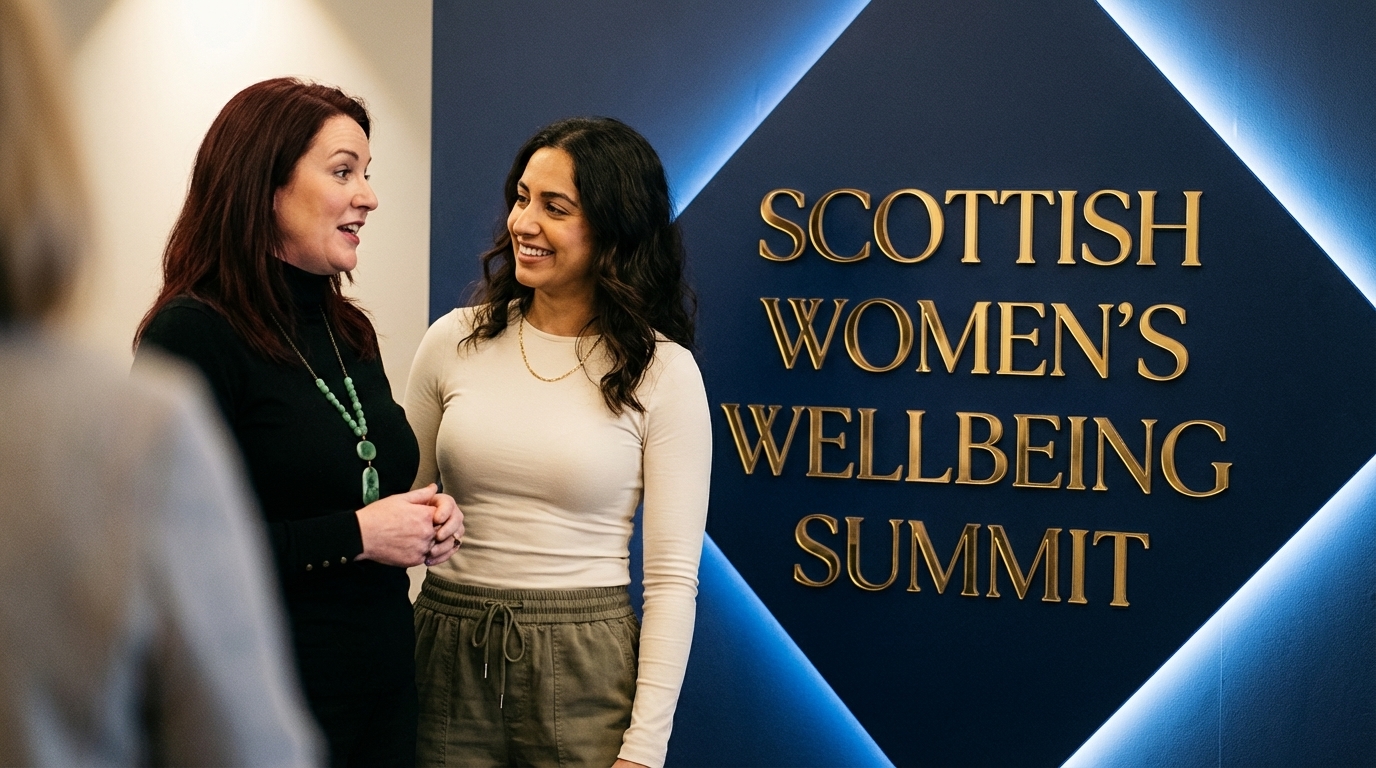
That is precisely what the Scottish Women's Wellbeing Summit exists to create.
What Happens When You Create Real Space
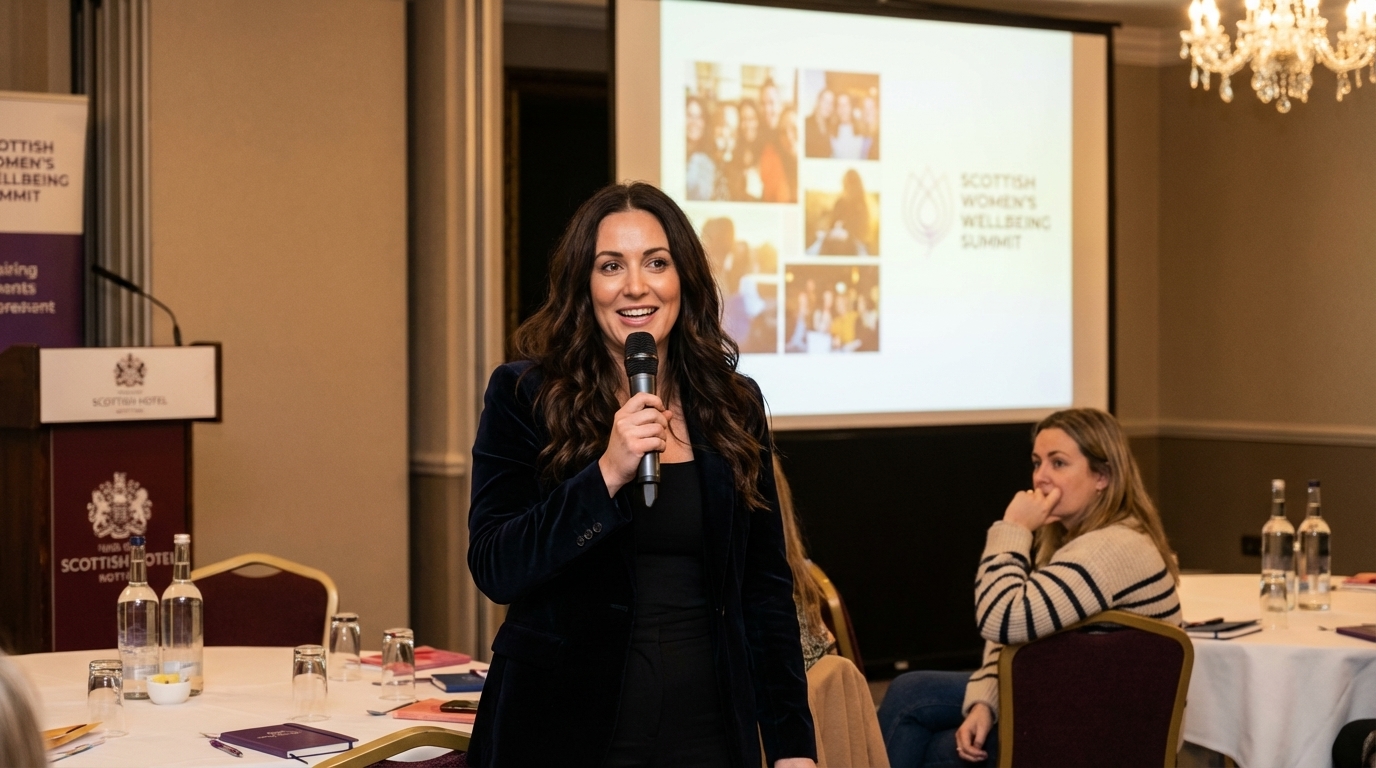
The summit is built on a simple but radical premise: that when women are given genuine space to reconnect, with themselves, with each other, with what actually matters, something shifts. Not because the problems disappear, but because they become navigable.
From firewalking to cold sea dips at sunrise, from expert-led workshops to guided mindfulness walks, the summit is designed for the full spectrum of what renewal actually looks like. Not a box-ticking wellness programme, but a genuine reset, one that sends you home grounded, clearer, and with a renewed sense of what you are capable of.
Companies offering structured wellbeing strategies see 25–40% lower turnover rates, driven by stronger engagement and retention. Imagine what happens when women invest in that for themselves.
You Are Not Broken. The System Simply Was Not Designed for You.
The burnout so many women are experiencing is not evidence of weakness. It is the entirely predictable result of operating in systems that were not built with them in mind — and then being asked to thrive anyway.
The Scottish Women's Wellbeing Summit is not about fixing women. It is about giving them back the space, the energy, and the community to lead in the way they were always capable of.
Because the data is clear: when women thrive, everything around them does too.
Join us at the Scottish Women's Wellbeing Summit. Early registration ensures you access the best rates and exclusive sessions.
Sources: McKinsey & LeanIn.Org Women in the Workplace 2025; Gallup Workplace Research 2025; Growthalista Burnout Statistics 2025; High5Test Leadership Burnout Statistics 2025; Meditopia for Work Employee Burnout Statistics 2026; World Economic Forum Gender Leadership Report 2026; PMC/Wolters Kluwer Health Burnout and Mental Health in Women Leadership 2026.